origins
An Indonesian coffee atlas, region by region
Most of the coffees in this log were roasted and grown in Indonesia, which remains one of the most underrated origins in specialty coffee. The archipelago spans thousands of kilometres of volcanic highland, and its regions taste as different from one another as Ethiopia does from Brazil. This is a short atlas of the ones that appear in the reviews, each drawn as an ink-wash plate.
Gayo, Aceh (northern Sumatra)

The highlands around Takengon sit between 1,200 and 1,600 metres, and the Gayo name carries most of Sumatra’s specialty reputation. Old associations with heavy, earthy wet-hulled cups are out of date: the current generation of Gayo producers ships washed, honey and anaerobic lots with red fruit, brown sugar and real clarity. Gayo lots appear throughout the top half of this log, including several 4.5s.
Kerinci (Jambi, central Sumatra)
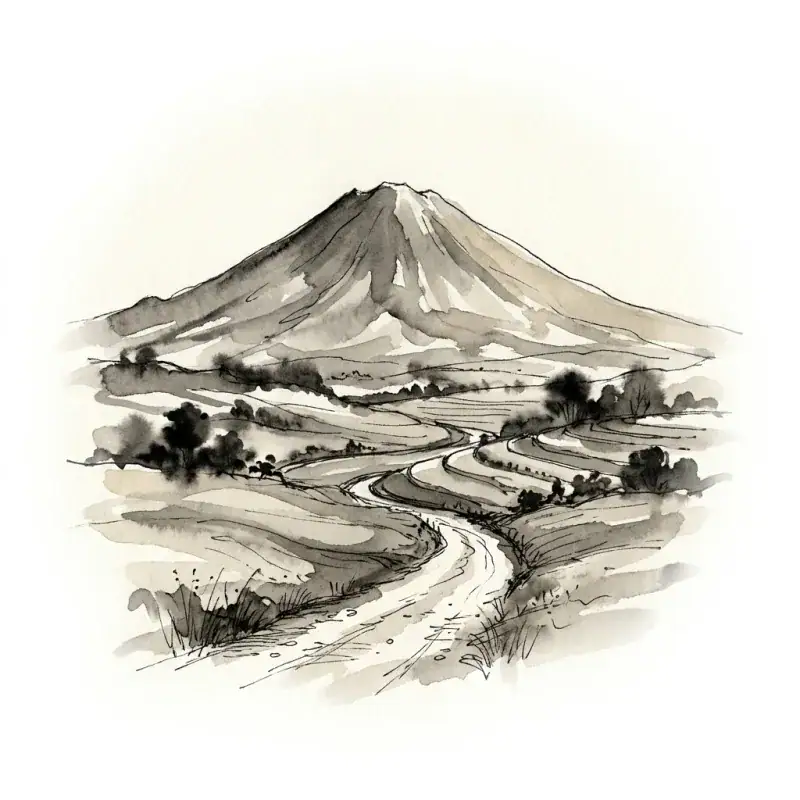
Kerinci sits in the highlands of Jambi, in the shadow of Mount Kerinci — Sumatra’s tallest volcano — on the fringe of a national park long known for its cinnamon. The plots here are small and scattered, and the cups run sweet and spiced, with chocolate-orange over a base of malt sugar. Only a handful of Kerinci lots have reached this log so far, but the ceiling looks high.
West Java (Malabar, Pangalengan)
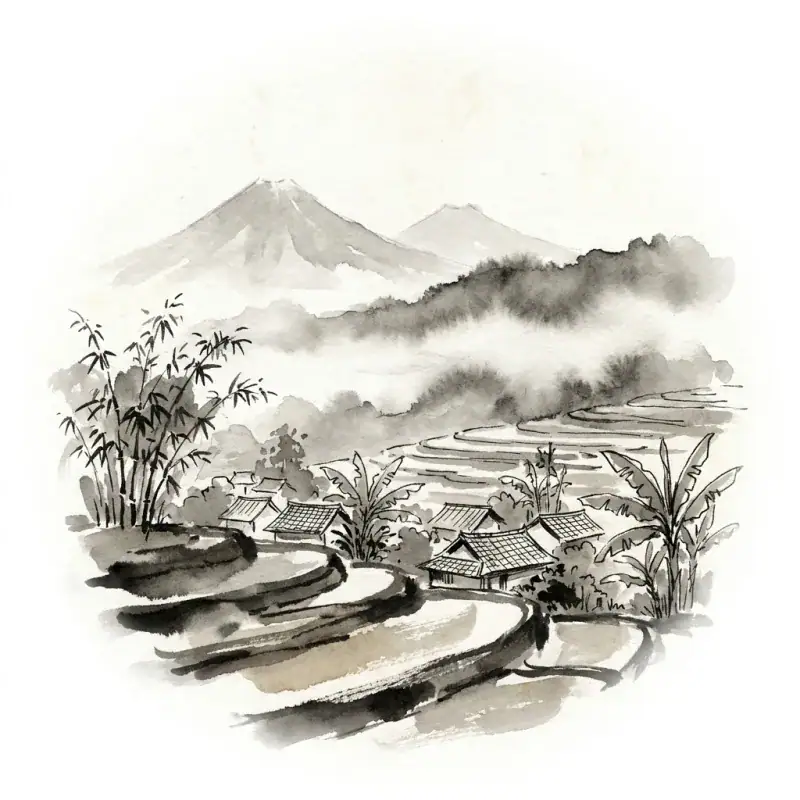
The Parahyangan mountains south of Bandung fed the world’s first coffee boom three centuries ago, and the region is now the centre of Indonesia’s experimental wave. Producers around Mount Malabar turn out carbonic maceration and yeast-inoculated lots that would look at home in a Colombian auction catalogue. Expect florals, stone fruit and wine when it works. The log’s most adventurous entries come from here.
Kintamani, Bali
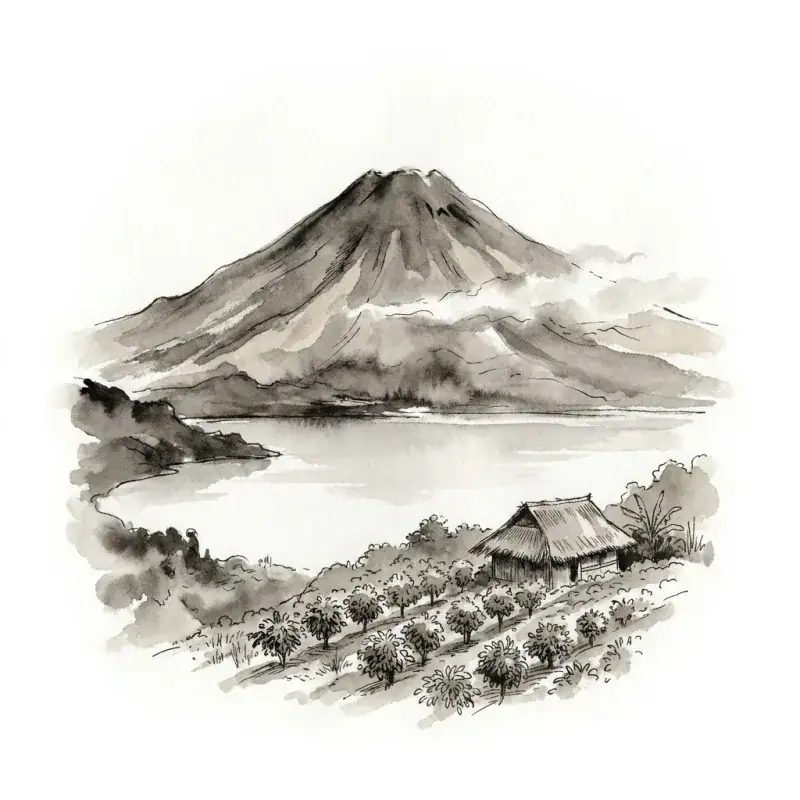
Grown on the slopes of Mount Batur among citrus orchards, under a traditional irrigation-cooperative system. The classic Kintamani cup is gentle: orange acidity, milk chocolate, a clean medium body. Balinese lots in the log tend to score as dependable rather than thrilling, which makes them good daily brewers.
Batu Dulang, Sumbawa
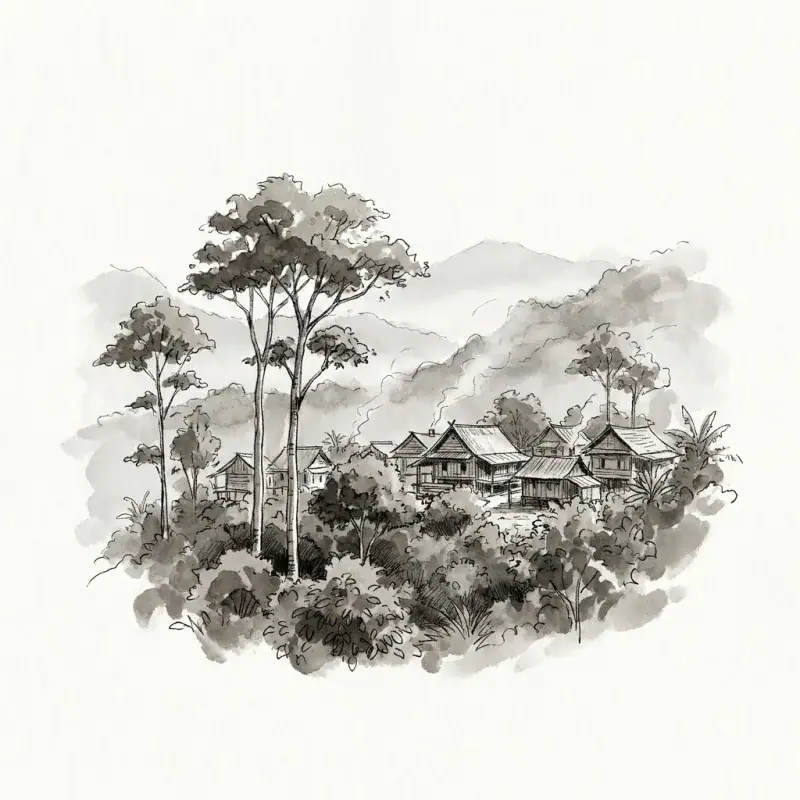
Batu Dulang is a forest village in the hills above Sumbawa Besar, where the coffee grows in shade beneath tall candlenut trees. Sumbawa is a minor presence in specialty channels, and only one lot has reached this log so far — sweet and rounded, with chocolate and nuts. One to watch as more of the island’s coffee finds its way to careful roasters.
Bajawa, Flores
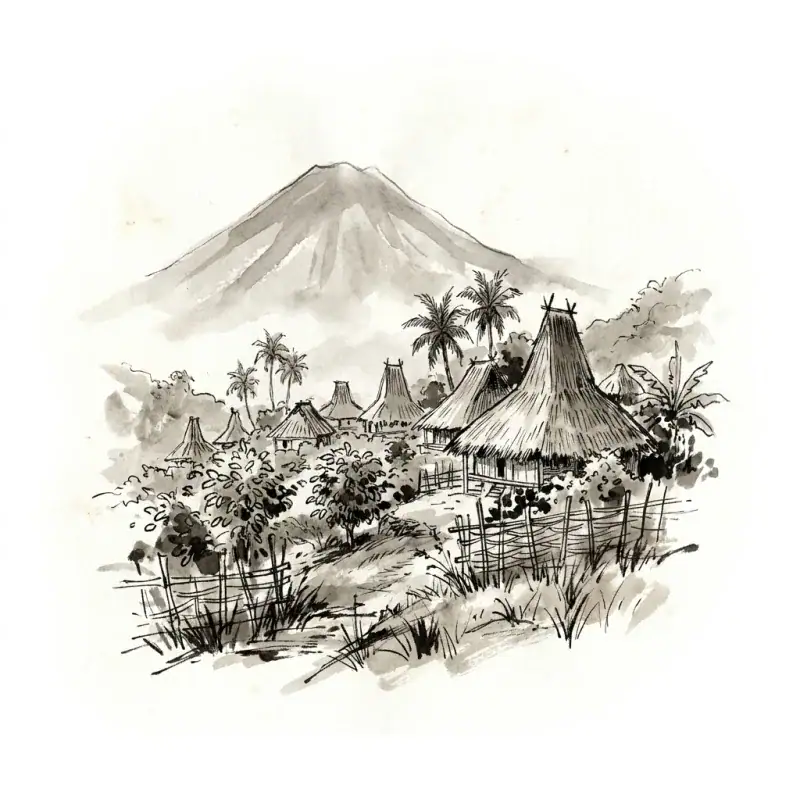
Ngada regency, on volcanic soils at around 1,300 metres, with the coffee often drying on bamboo mats between thatched roofs. Flores cups combine the body of Sumatra with a sweetness closer to Central America: think dark chocolate, prune and treacle. The island’s semi-washed and natural lots both show up in the log.
Toraja, South Sulawesi
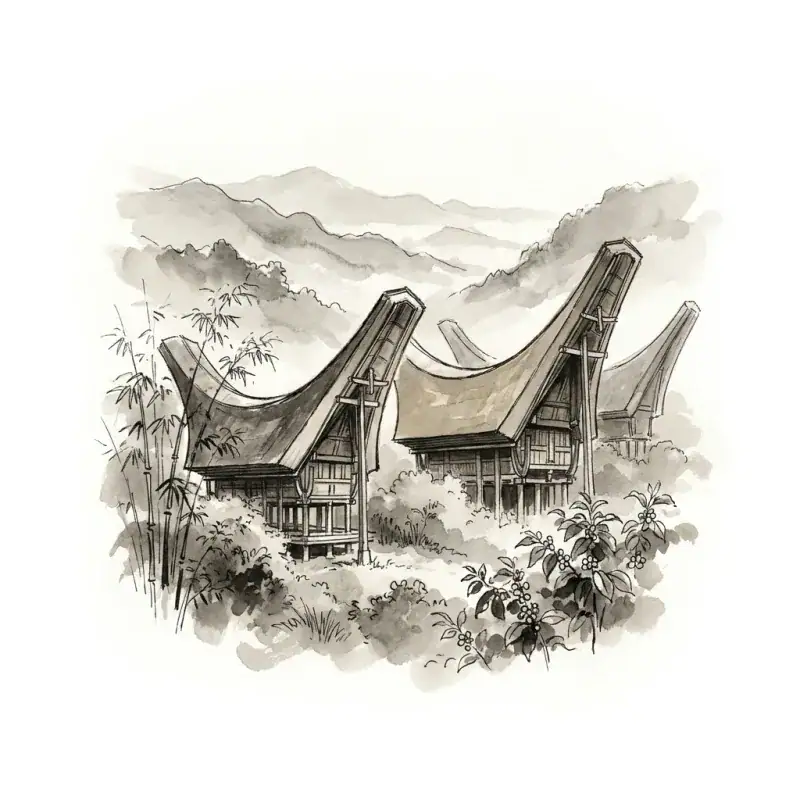
Terraced highlands with some of the archipelago’s oldest coffee culture, where tongkonan roofs rise above the gardens. Toraja lots are structured and savoury, with cedar, spice and a long finish. They reward darker roasting better than most Indonesian coffees, though the specialty lots reviewed here stay light.
East Java (Ijen plateau)
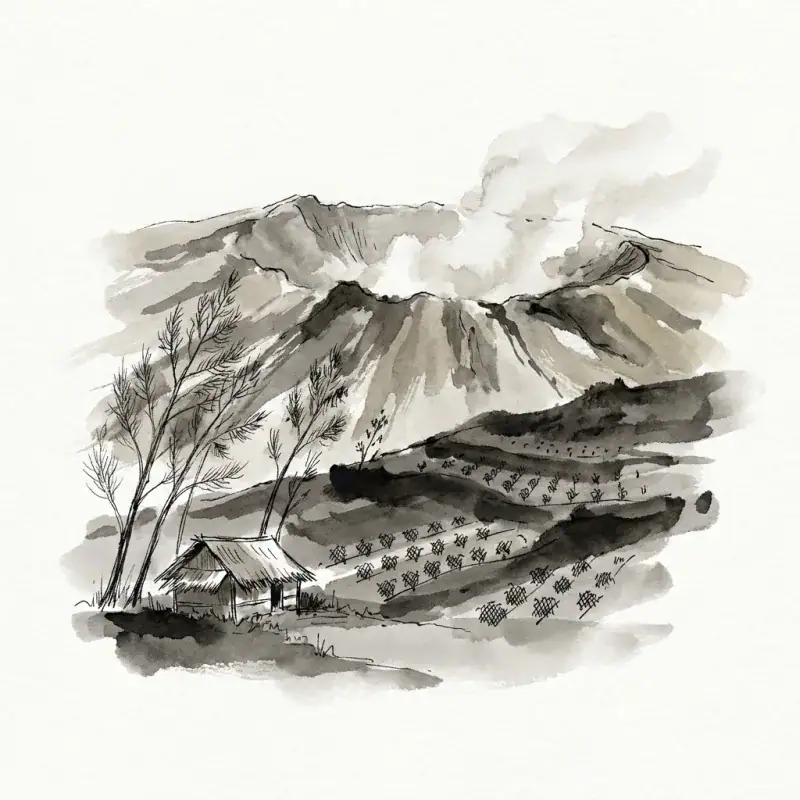
Grown around the volcanic Ijen crater. A smaller presence in specialty channels, historically supplying estate coffee to the commodity market, but recent smallholder lots show bright apple and honey profiles. The Argopuro lot at the top of this log grows on the neighbouring massif.
Buying Indonesian coffee well
Freshness matters more here than for most origins, because many of the flavour-forward lots are fermentation-driven and fade fast. Check roast dates, favour roasters who name the producer and the process, and treat “Sumatra” with no further detail as a commodity label. The reviews on this site list roast dates and process for exactly that reason.